
First Impressions Are Made Before the First Whiff
In global trade, a product is judged before a buyer ever opens it. A container ship, a wholesale showroom, or a retail shelf far from the factory — that’s where the real sales pitch happens. It happens visually, through Incense Packaging for Export. For incense exporters, packaging is far more than a protective shell. In fact, it’s the silent salesperson. It communicates quality, authenticity, and trust to a buyer who may never meet the manufacturer in person.
Buyer psychology in international markets is unforgiving. Distributors sift through dozens of samples at trade shows and online catalogs, and as a result, they make snap judgments based on look, feel, and perceived value. Well-designed Incense Packaging for Export does the heavy lifting: it signals that the product was made with care, shows the product meets import standards, and suggests the product will sell well on a shelf in New York, Berlin, or Dubai. Poor packaging, on the other hand, raises doubts even when the incense itself is excellent.
What Makes Incense Packaging for Export Different
Domestic packaging and export packaging solve different problems. Export packaging must survive long transit times, customs inspections, humidity changes, and handling by multiple intermediaries. At the same time, it must look as polished on day one as it does after weeks in transit.
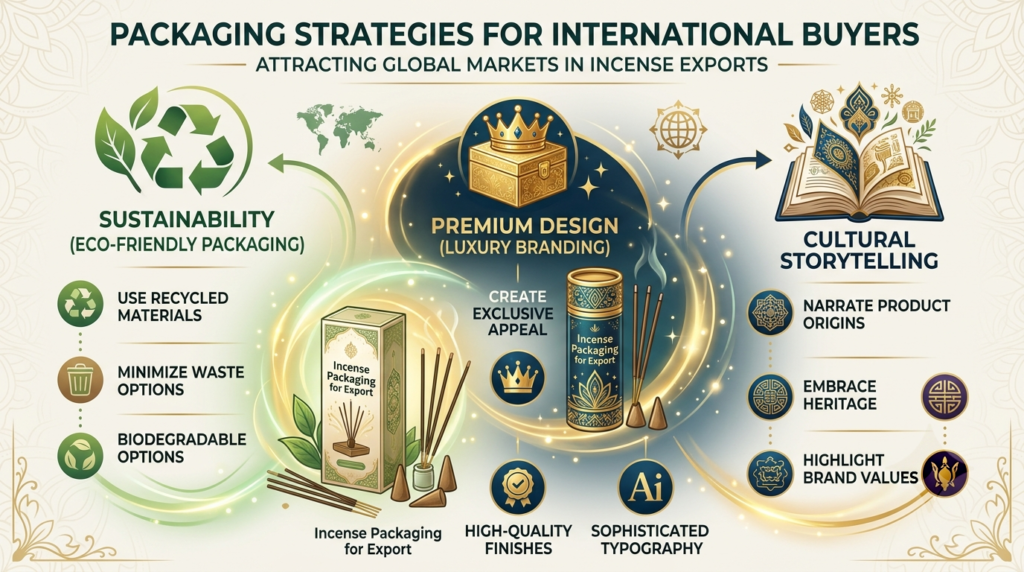
This is where Incense Packaging for Export earns its place as a specialized strategy, not an afterthought. Specifically, the best exporters combine three elements at once:
- Eco-friendly materials that satisfy environmental expectations in regulated markets
- Premium design that elevates a traditional product into a lifestyle item
- Cultural storytelling that gives the product an identity buyers can market to their own customers
None of these elements work alone. For example, a biodegradable box with no design sensibility looks cheap, while a beautifully designed box made of non-recyclable plastic can hurt a brand in sustainability-conscious markets. Therefore, the winning formula blends all three. (For a primer on packaging sustainability standards, see the Sustainable Packaging Coalition.)
Regional Trends in Incense Packaging for Export
United States: Clean Labels and Wellness Branding
American buyers in the wellness and home fragrance space respond to minimalist design. Additionally, they look for transparent ingredient labeling and language around mindfulness or self-care. As a result, packaging that feels closer to a boutique candle brand performs better with US retailers and Amazon-first buyers than a traditional incense pack does.
Europe: Sustainability as a Non-Negotiable
European buyers, especially in Germany, France, and the Nordic countries, treat sustainable packaging as a baseline requirement. Recyclable kraft paper, soy-based inks, and reduced plastic aren’t just preferences; in many cases, they are prerequisites for entering retail chains with strict environmental procurement policies.
Middle East: Luxury Aesthetics and Gifting Culture
In Gulf markets, incense — bakhoor and oud traditions — is tied closely to hospitality and gifting. Consequently, buyers respond strongly to luxury aesthetics: gold foiling, textured papers, ornate patterns, and rigid gift-box structures. Because of this cultural context, ceremonial, premium-feeling packaging commands stronger margins here than minimalist Western-style designs.
Across all three regions, however, one trend is universal: compact, retail-friendly formats. Buyers want packaging that ships efficiently, displays well on crowded shelves, and doesn’t require excessive secondary packaging at the point of sale.
Actionable Incense Packaging for Export Strategies
1. Pursue Recognized Eco-Certifications Certifications like FSC (Forest Stewardship Council) for paper sourcing, or compostability marks, give buyers an instant trust signal. Furthermore, they reduce the due-diligence burden on the buyer’s end.
2. Invest in Biodegradable and Recyclable Materials Kraft paper boxes, plant-based films, and soy or water-based inks reduce environmental impact. In addition, they often lower long-term material costs.
3. Elevate Branding Beyond the Product Itself Typography, color palette, and finish — matte, embossed, foil-stamped — should reflect the product’s positioning, whether that position is wellness, luxury, or heritage. Above all, keep this consistent across the entire line.
4. Use Design as a Storytelling Tool Short narratives about sourcing, tradition, or ritual help buyers market the product’s authenticity. For instance, these can be printed on the box or made accessible via a QR code.
5. Design for Compact, Efficient Shipping Stackable, modular box designs reduce freight costs. Meanwhile, they also appeal to buyers who need efficient warehouse and shelf space usage.
Traditional vs. Modern Incense Packaging for Export
Traditional incense packaging in many exporting countries relies on plain plastic wrapping or generic printed sleeves. Although this approach may keep domestic costs low, it’s functional but forgettable, and it rarely survives the scrutiny of international buyers comparing dozens of suppliers side by side.
Modern Incense Packaging for Export, by contrast, flips this model. It treats the box as a brand touchpoint: structurally sound for transit, visually distinctive on a shelf, and materially aligned with the destination market’s sustainability expectations. Ultimately, the difference shows up directly in buyer trust, and trust converts into repeat purchase orders rather than one-off trial shipments.
Packaging as a Sales Strategy, Not a Cost Center
Exporters who view packaging purely as a cost line are leaving margin on the table. In competitive international markets, packaging is instead a strategic lever — one that shapes buyer perception, supports premium pricing, and builds the brand credibility that turns a single order into a long-term distribution relationship.
Overall, the exporters who invest early in eco-friendly materials, premium design, and authentic storytelling build lasting partnerships with international buyers rather than simply filling one-time containers.
Ready to Elevate Your Export Packaging?
Heaven’s Aroma has built its export strategy around exactly this combination: premium design, sustainable materials, and packaging that tells a story buyers can sell. So, if you’re an exporter looking to stand out internationally, it’s time to rethink your packaging as seriously as you rethink your product. Explore Heaven’s Aroma’s incense export range and reach out to learn how our Incense Packaging for Export strategies can help your products earn buyer trust from the very first impression.