
Incense Export to Canada: What Buyers Really Expect
Canada’s wellness economy has been quietly booming for years. It shows no sign of slowing down. From yoga studios in Vancouver to meditation cafes in Toronto, Canadian consumers are spending more on products that support mindfulness, calm, and intentional living. Incense has long been used in spiritual and self-care rituals. As a result, it sits right at the center of this shift. For exporters eyeing this market, understanding incense export to Canada isn’t just about shipping product across the border. Instead, it’s about understanding what Canadian buyers actually value, and building a supply relationship that meets those expectations from day one.
Why Incense Export to Canada Is a Strong Opportunity
Canadian consumers increasingly gravitate toward products that feel authentic and sustainably made. They also want products rooted in genuine tradition. Wellness retail, home fragrance, and eco-conscious lifestyle brands have all seen steady growth. Incense fits naturally into that basket. After all, it’s affordable, ritualistic, and easy to fold into daily routines — morning meditation, evening wind-down, or simply freshening a living space.
What sets the Canadian buyer apart, however, is scrutiny. They’re not just buying a scent; they’re buying a story. Where was it made? By whom? What’s it made of? Exporters who can answer these questions clearly have a real edge. That edge grows even stronger when they back up their answers with genuine sourcing practices. In short, a thoughtful approach to incense export to Canada pays off far more than a purely price-driven one.
Canadian Buyer Expectations for Incense Products
Authenticity and Craftsmanship
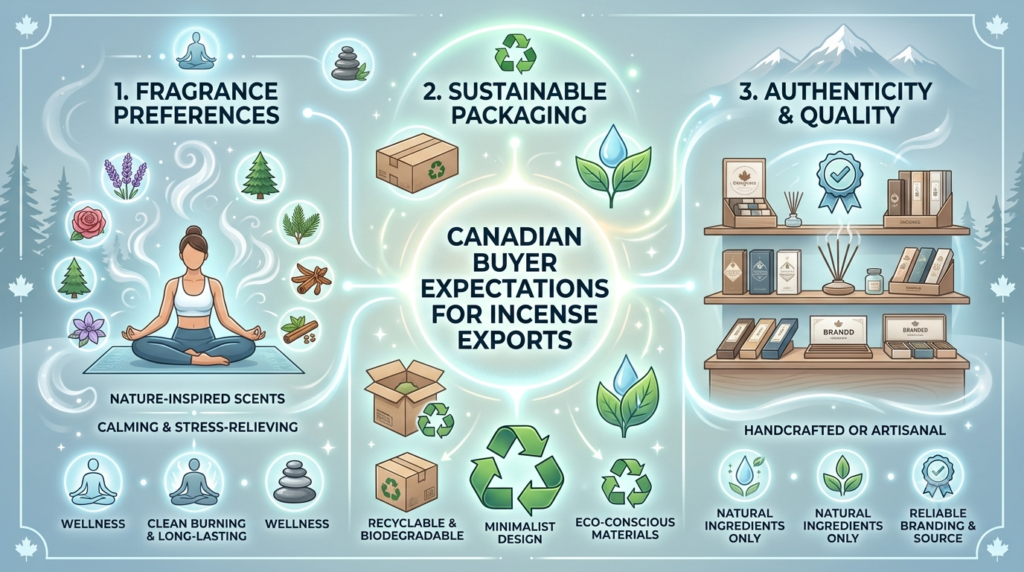
Canadian buyers respond strongly to products that feel handmade. They also favor products that feel culturally rooted rather than factory-anonymous. Incense with a clear origin story — a region, a tradition, a family recipe — resonates far more than incense marketed purely on scent alone.
Sustainability Expectations in Canadian Retail
Eco-conscious sourcing is no longer a nice-to-have. Buyers actively look for natural ingredients and sustainably harvested wood and resins. They also expect manufacturing processes that avoid harsh chemicals or synthetic binders. According to Environment and Climate Change Canada, sustainability expectations across Canadian retail keep rising year over year. Any exporter who can speak credibly to sourcing practices — bamboo cores, natural gums, plant-based fragrance oils — will stand out immediately.
Packaging That Reflects the Product
Packaging is where many otherwise strong incense products lose Canadian buyers. Plastic-heavy or overly ornate packaging undercuts the premium, mindful positioning the product is trying to claim. As a general rule, Canadian retailers expect recyclable or biodegradable packaging. They also want clean, minimalist design and clear labeling of ingredients and origin.
Fragrance Preferences for the Canadian Incense Market
Canadian incense buyers tend to favor three broad fragrance families:
- Floral — jasmine, rose, and lavender for calming, home-fragrance use
- Woody — sandalwood, cedar, and agarwood for grounding, meditative use
- Herbal — sage, palo santo-style blends, and other cleansing scents tied to ritual use
Exporters who offer a curated range across these categories tend to perform better. A single dominant scent rarely satisfies Canadian retail buyers, who want variety for different customer moods and occasions.
A Step-by-Step Guide to Incense Export to Canada
1. Get your certifications in order. Canadian import regulations require attention to product safety and labeling. In some cases, combustion-related documentation is also required. Exporters should confirm compliance with Health Canada requirements where applicable. Standard export documentation is also needed: certificate of origin, commercial invoice, and packing list.
2. Understand Canadian labeling rules. Canada requires bilingual labeling — English and French — on retail packaging. Ingredient lists, safety warnings, and net quantity must appear clearly in both languages. This is non-negotiable for retail placement.
3. Plan logistics realistically. Incense is lightweight, but it’s often shipped in bulk cartons. Work with freight forwarders experienced in Canadian customs clearance. Factor in Canada Border Services Agency documentation requirements to avoid delays at the border.
4. Choose the right entry point. Many exporters start with wellness boutiques, yoga studios, and independent gift shops. This lets a brand build reputation and reviews before scaling into larger retail chains or e-commerce marketplaces.
5. Position for retail, not just price. Canadian retailers are often willing to pay a premium for a well-told, well-packaged product. Competing purely on low price tends to undersell the category. Positioning around craftsmanship and sustainability performs better long-term.
Machine-Made vs. Hand-Rolled Incense: Why Handmade Wins in Canada
Machine-made incense is cheaper and faster to produce. However, it often reads as generic to Canadian buyers who are actively seeking authenticity. Hand-rolled incense is different. It carries visible texture, slight natural variation, and a story of human craftsmanship. That story aligns directly with what Canadian wellness consumers are looking for.
Hand-rolled sticks also tend to burn more evenly. They release a fuller, more layered fragrance, since the ingredients are worked by hand rather than compressed by machine. For exporters, this isn’t just a manufacturing detail — it’s a marketing asset. Canadian buyers who understand they’re purchasing something made with care are more likely to become repeat customers and brand advocates.
Final Thoughts on Incense Export to Canada
Successfully exporting incense to Canada means treating the product as more than a commodity. Canadian buyers are looking for a story worth telling: authentic origins, sustainable materials, thoughtful packaging, and craftsmanship they can feel. Exporters who build their offering around these values are far better positioned for long-term success with incense export to Canada.
Ready to bring genuine, hand-rolled incense to Canadian shelves? Partner with Heaven’s Aroma for authentic incense exports tailored to Canadian markets. Reach out today to start building a supply relationship rooted in quality, sustainability, and tradition.