
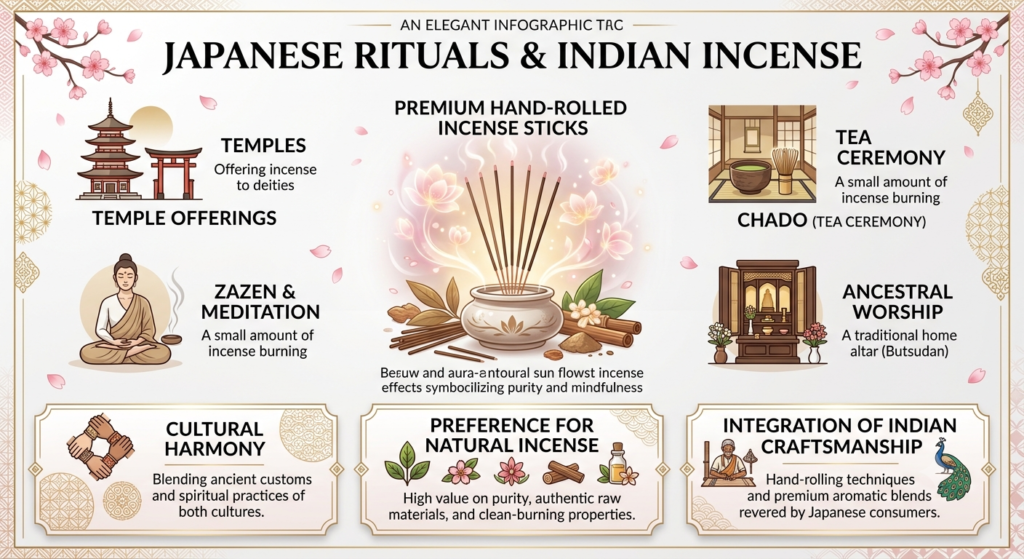
Premium Hand-Rolled Incense Sticks from India are finding a thoughtful audience in Japan, where incense already holds deep cultural meaning. Japanese buyers don’t adopt new rituals casually, so this growing interest says something important about how well Indian incense aligns with existing Japanese values. Understanding that alignment starts with Japan’s own long history of incense use.
Japan’s History of Incense: Temples, Tea Ceremonies, and Ancestral Worship
Incense arrived in Japan more than a thousand years ago, initially through Buddhist temples, where it accompanied prayer and meditation. Over time, this practice expanded into kōdō, the traditional Japanese art of appreciating incense, which treats scent with the same reverence as a tea ceremony or calligraphy. Incense also plays a central role in ancestral worship, where families light it at home altars to honor those who came before them.
Because this tradition emphasizes subtlety, discipline, and quiet appreciation, Japanese buyers approach incense with genuine expertise. They don’t simply want fragrance — they want a product that reflects the same care and precision found in their own traditions.
Why Premium Hand-Rolled Incense Sticks Resonate with Japanese Values
Premium Hand-Rolled Incense Sticks from India share several core values with Japanese incense culture, which explains their growing appeal:
- Purity. Japanese buyers value clean, well-balanced scents free from synthetic overload, and hand-rolled incense made from natural resins and herbs meets that expectation.
- Mindfulness. Much like kōdō treats incense as a meditative practice, Indian hand-rolled incense encourages a similar slow, intentional ritual.
- Craftsmanship. Japanese culture places enormous value on skilled handwork, and artisans rolling each stick individually mirrors this same respect for the maker’s hand.
Because these values overlap so closely, Indian incense doesn’t feel foreign to Japanese buyers. Instead, it feels like a natural extension of principles they already hold.
Floral and Woody Fragrances in Meditation and Zen Practice
Fragrance choice matters deeply within Japanese ritual contexts, and certain notes fit especially well.
Woody fragrances, particularly sandalwood and agarwood, align closely with traditional Japanese incense profiles already used in Zen meditation and temple settings. These deep, grounding scents support long periods of stillness and focus. Floral notes, including jasmine and rose, appear more often in seasonal rituals and home settings, where lighter, more delicate fragrances suit everyday mindfulness practices rather than formal ceremony.
Because Japanese seasonal awareness runs deep — reflected in traditions like hanami and seasonal tea ceremonies — buyers often rotate fragrances throughout the year, pairing lighter florals with spring and summer, and richer woody notes with autumn and winter.
Indian Incense vs. Japanese Incense: Blending Two Traditions
Japanese and Indian incense-making traditions differ in technique, yet many buyers find value in blending both.
Japanese incense typically uses finer, more concentrated ingredients, producing a subtle, refined scent designed for small, intimate spaces. Indian hand-rolled incense, by contrast, often carries a bolder, more layered fragrance profile, shaped by centuries of temple and ritual use across a much larger geographic and cultural range.
Rather than viewing these traditions as competing, many Japanese buyers use them together. They might reserve Japanese incense for formal kōdō practice while turning to Indian incense for daily meditation, home rituals, or moments that call for a richer, more expressive scent. This blending adds spiritual depth, drawing on the strengths of both traditions rather than choosing one over the other.
Buyer Psychology: Why Japanese Consumers Value Authenticity
Japanese consumers tend to research products carefully before purchasing, particularly items tied to ritual or spiritual practice. According to research from the Global Wellness Institute, consumers across Asia increasingly prioritize products with verified natural ingredients and transparent sourcing, a pattern especially strong in Japan’s discerning wellness market.
Three factors drive this careful buying behavior:
- Authenticity. Japanese buyers can quickly identify products that feel manufactured rather than genuinely crafted, making artisanal origin a critical selling point.
- Eco-friendly production. Sustainability concerns run high across Japanese consumer culture, and hand-rolled incense’s lower environmental footprint appeals directly to this value.
- Artisanal quality. Because Japan already reveres skilled craftsmanship in its own traditions, buyers naturally respect that same quality when they find it in imported goods.
This combination makes Japanese buyers some of the most quality-conscious consumers in the global incense market.
A Bridge Between Two Traditions
Indian incense and Japanese ritual culture may have developed independently, but they share a common foundation: reverence for scent, mindfulness, and skilled craftsmanship. For Japanese buyers, Premium Hand-Rolled Incense Sticks offer a way to deepen their existing practice rather than replace it, adding new depth to rituals already centuries in the making.
If you want to explore this connection for yourself, discover Heaven’s Aroma’s Premium Hand-Rolled Incense Sticks — crafted with the same care and intention that Japanese incense traditions have honored for generations.