
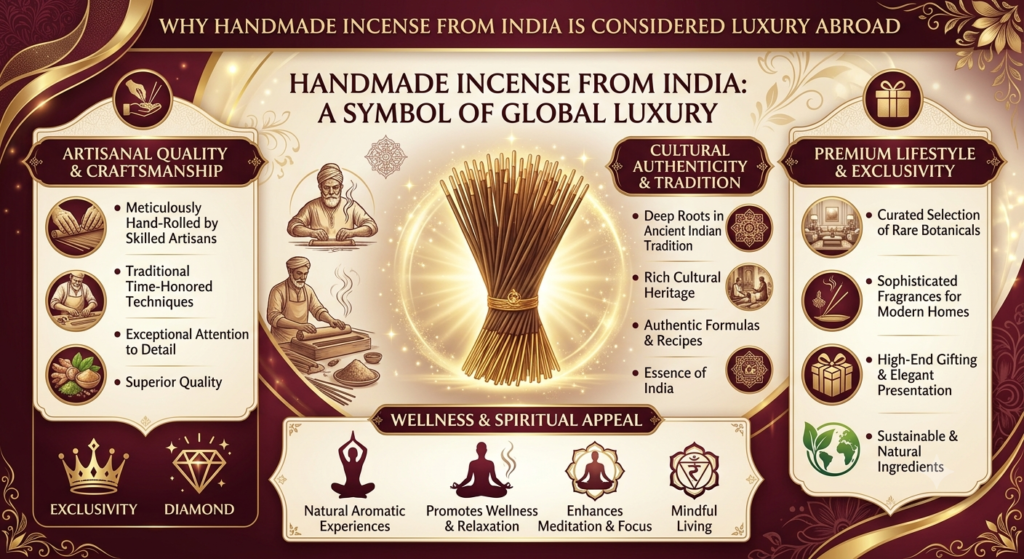
Premium Hand-Rolled Incense Sticks have earned a reputation as a luxury good in markets far from their origin. In cities like New York, London, and Dubai, buyers now treat Indian incense less like a household item and more like a curated lifestyle product. This shift traces back to India’s deep heritage of incense craftsmanship, and it explains why handmade incense commands premium prices internationally.
India’s Heritage of Craftsmanship and Spiritual Significance
Incense making in India dates back thousands of years, woven tightly into religious rituals, meditation practices, and daily life. Families in regions like Mysore and Bangalore have passed rolling techniques down through generations, refining recipes long before “artisanal” became a marketing term.
Because this craft carries genuine spiritual weight, it resonates differently than newer wellness trends. Buyers abroad sense that authenticity, and it shapes how they perceive the product. Incense rolled by hand in India doesn’t just smell different — it carries a story that mass-produced alternatives simply cannot replicate.
How Premium Hand-Rolled Incense Sticks Embody Artisanal Quality
Premium Hand-Rolled Incense Sticks combine several qualities that international buyers associate with luxury:
- Artisanal quality. Skilled rollers shape each stick by hand, which means no two sticks are perfectly identical. This imperfection signals craftsmanship rather than flaw.
- Natural ingredients. Artisans use natural resins, herbs, and essential oils instead of synthetic fragrance compounds, which appeals to buyers who value purity and traceability.
- Cultural authenticity. Each stick carries centuries of tradition, giving buyers a genuine connection to Indian heritage rather than a generic scent product.
Together, these traits transform incense from a simple household item into a premium lifestyle purchase.
Global Consumer Psychology: Why Handmade Feels Exclusive
Luxury buyers rarely purchase products purely for function. Instead, they buy meaning, story, and exclusivity. Handmade incense checks all three boxes.
First, limited production naturally creates scarcity. Because artisans can only roll so many sticks by hand each day, handmade incense feels rare compared to machine-made alternatives produced by the thousands per hour. Scarcity, in turn, drives perceived value.
Second, wellness culture has primed global buyers to associate natural, ritualistic products with premium living. Much like the Global Wellness Institute has documented the rapid growth of the wellness economy worldwide, buyers increasingly view products like incense as tools for mindful living rather than simple room fragrance.
Third, cultural authenticity adds emotional weight. Owning a product tied to genuine tradition feels more meaningful than owning something mass-produced, and buyers willingly pay more for that meaning.
Handmade vs. Machine-Made: The Luxury Divide
The gap between handmade and machine-made incense explains much of this luxury positioning.
Machine-made incense prioritizes speed and consistency. Manufacturers use synthetic fragrance oils and standardized production lines to keep costs low, which works well for budget retail but strips away the story buyers now seek.
Handmade incense takes a different path. Because artisans roll each stick individually, production stays slow and intentional. This process delivers several advantages:
- Craftsmanship. Every stick reflects the skill of the person who made it, not a machine’s programming.
- Eco-friendly production. Hand-rolling uses far less energy than automated manufacturing, and many producers pair this with biodegradable packaging.
- Limited availability. Smaller batch sizes naturally create exclusivity, which luxury buyers actively seek out.
When buyers understand this divide, machine-made incense starts to feel generic by comparison — and handmade incense starts to feel like a genuine investment.
How Luxury Markets Position Indian Incense
Different regions position Indian incense in slightly different ways, though the underlying appeal stays consistent.
In the USA, boutique wellness retailers and lifestyle brands market handmade incense alongside candles, essential oils, and home fragrance lines, often at price points well above mass-market alternatives. Buyers treat it as part of a broader self-care ritual.
In Europe, luxury home fragrance already commands strong demand, and Indian incense fits naturally into that category. European buyers often pair authenticity with sustainability, so brands that emphasize both traditional craftsmanship and eco-friendly production perform especially well.
In the Middle East, incense already holds deep cultural significance through traditions like bukhoor and oud burning. Indian hand-rolled incense complements this existing appreciation, and premium retailers frequently position it alongside luxury fragrance and home decor products.
Across all three regions, the pattern remains the same: buyers see handmade Indian incense as a premium, story-rich product worth paying more for.
A Symbol of Tradition and Luxury
Handmade incense from India has moved far beyond its original role as a simple household product. Today, it represents craftsmanship, cultural heritage, and mindful living — qualities that luxury buyers around the world actively seek out.
If you want to bring this same tradition into your own space, or offer it to discerning customers, explore Heaven’s Aroma’s Premium Hand-Rolled Incense Sticks. Each stick reflects generations of craftsmanship, rolled by hand and rooted in authenticity — a small ritual with a rich story behind it.